Natural marble vs marble-look porcelain: the real differences
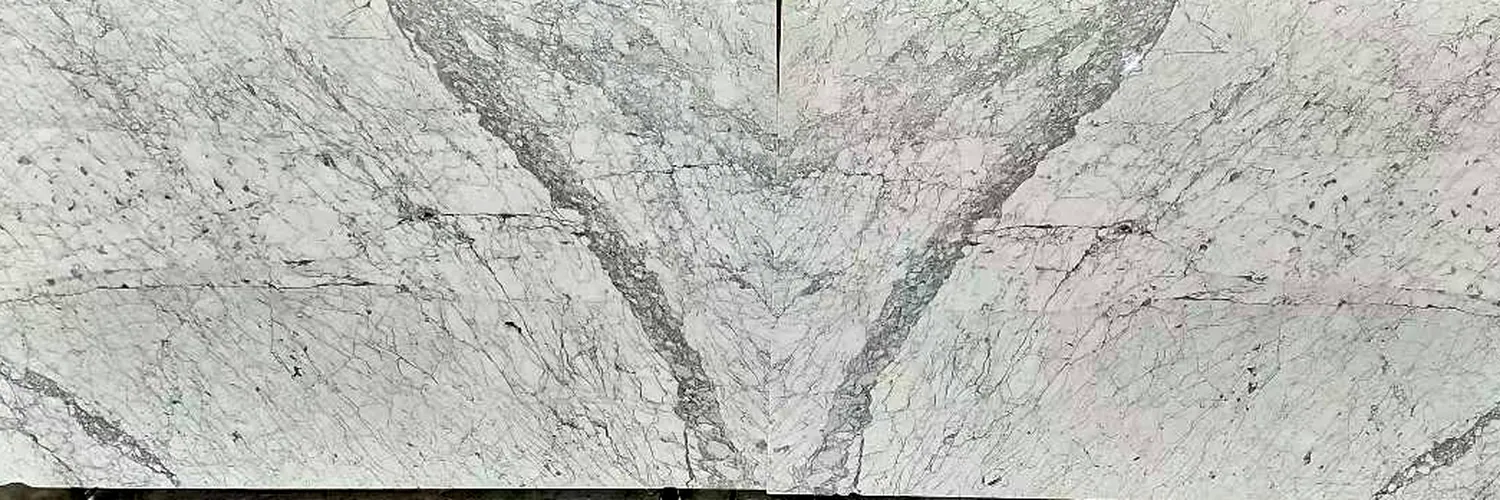
Some porcelain slabs now imitate Calacatta or Statuario almost perfectly. Is real marble still worth it? It depends on what you value. These are the differences that matter.
What each one is
- Natural marble: rock quarried, sawn into slabs and polished. Every slab is unique.
- Porcelain and sintered surfaces: ceramic materials made from clays and minerals fired at very high temperatures. The marble look is a digital print on the surface, or a decoration that runs through part of the thickness.
Comparison
| Natural marble | Porcelain / sintered | |
|---|---|---|
| Look | Real depth, every slab different | Printed image; designs repeat |
| Edges | Veining continues through the edge | The edge often gives the material away (except through-body designs) |
| Acids and stains | Sensitive: needs sealing and care | Very resistant |
| Scratches | Scratches | Very resistant |
| Impacts | Copes well at 2–3 cm thick | Thin pieces can chip at the edge |
| Repair | Can be re-polished and restored | A chip in the printed face is hard to hide |
| Ageing | Develops a patina over the years | Stays the same |
When to choose natural marble
- When you want a one-off piece: a slab of Calacatta Viola or Statuario never repeats.
- For genuine bookmatching or veining that flows over edges and waterfalls.
- If you value being able to restore it in 20 years, and a surface that ages with character.
- For bathrooms, walls, tables and statement pieces, where its weak points hardly matter.
When to choose porcelain
- For a marble look with zero maintenance.
- On very large surfaces where you want a uniform, repeatable pattern.
- In very heavy-use areas where you will not accept any mark.
The third way: quartzite
If you love the look of marble but not its upkeep, and prefer a natural material, consider light quartzites: Taj Mahal, Mont Blanc or Calacatta Da Vinci. They are natural stone and far harder than marble. See our quartzite countertop guide.
Unsure? Ask us for photos of real slabs and compare them with the porcelain sample. Get a quote.
Have a project in mind?
Ask us for a no-obligation quote: we will reply with an indicative price.