Marble vs quartzite: the real differences for countertops
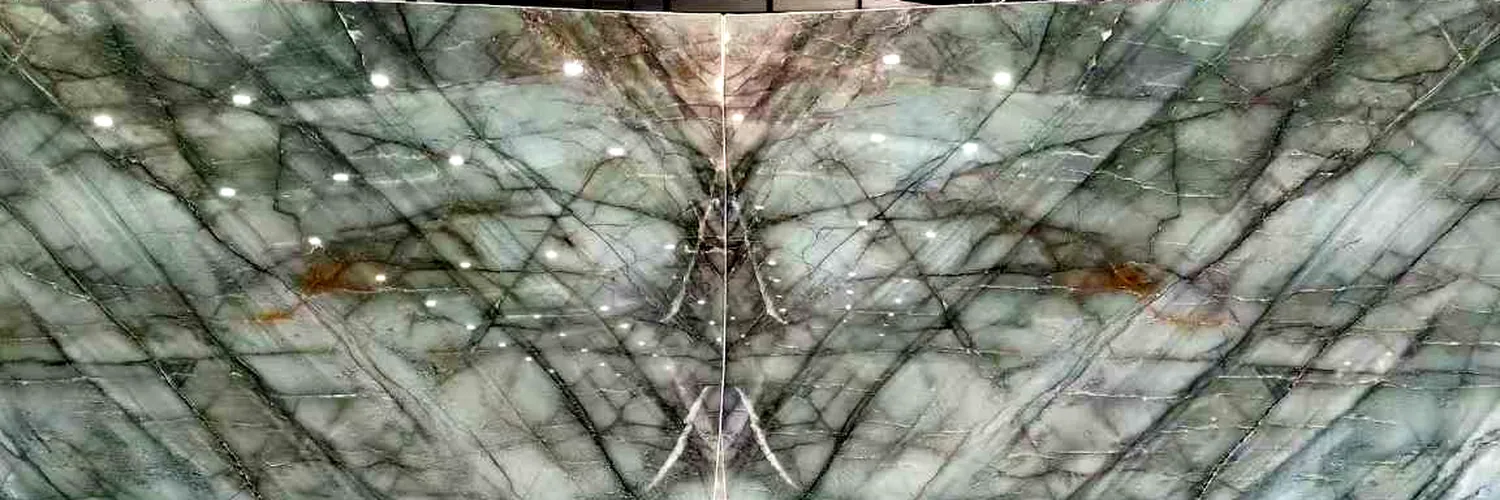
Many quartzites look so much like marble that it is hard to tell them apart in a photo. Inside, though, they are very different stones, and you will notice it in the kitchen. Here is the comparison, point by point.
What each one is made of
- Marble: limestone transformed by heat and pressure. It is mostly calcite, a soft mineral (3 on the Mohs hardness scale).
- Quartzite: sandstone transformed by heat and pressure. It is mostly quartz, a very hard mineral (7 on the Mohs scale), harder than a steel knife.
Every other difference follows from this.
Side by side
| Marble | Quartzite | |
|---|---|---|
| Scratches | A knife will scratch it | Very resistant; a knife will not scratch it |
| Lemon, vinegar, wine | Leave dull etch marks (calcite dissolves) | Not affected |
| Stains | Absorbs; needs sealing | Depends on the stone; many are sealed too |
| Heat | Handles it well, but use trivets | Handles it well, but use trivets |
| Look | Soft, deep veining: the classic reference | Can look like marble; there are also quartzites with crystal and bold colours |
| Ageing | Develops a patina with use | Stays almost as new |
| Fabrication | Easy to cut and polish | Harder to cut: takes the shop longer and wears tools |
Which one costs more?
It depends a lot on the specific stone: there are everyday marbles and luxury marbles, and the same goes for quartzite. What is generally true is that quartzite costs more to fabricate, because it is harder to cut and polish. So, for comparable slabs, the fabrication quote is usually somewhat higher.
Watch out: not everything sold as quartzite is quartzite
Some stones sold as quartzite are actually dolomitic marble. It is a little harder than regular marble, but it still reacts to acids. This happens mostly with some white stones. Before you commit, ask for a sample of the actual slab and do two tests:
- Glass test: rub a sharp corner of the sample across a piece of glass (a glass tile or an old jar). Real quartzite scratches glass; marble does not.
- Lemon test: leave a few drops of lemon juice or vinegar on the polished face for 10 minutes, then rinse and dry. If a dull mark remains, the stone contains calcite or dolomite: treat it like marble.
So which should you choose?
- Choose marble if you have fallen for a particular marble (a Calacatta or a Statuario) and you are happy for it to develop a patina over the years, like in classic Italian kitchens. It is perfect for bathrooms, walls and tables that see little wear.
- Choose quartzite if you cook a lot, have children or want a countertop you do not have to worry about. Some quartzites have a marble look, such as Calacatta Da Vinci or Taj Mahal.
For a closer look at the pros and cons of each, see marble countertops and quartzite countertops. If you are also considering engineered quartz or granite, read our four-way comparison.
Have a project in mind?
Ask us for a no-obligation quote: we will reply with an indicative price.