Types of Calacatta marble: Oro, Viola, Borghini, Macchia Vecchia and more
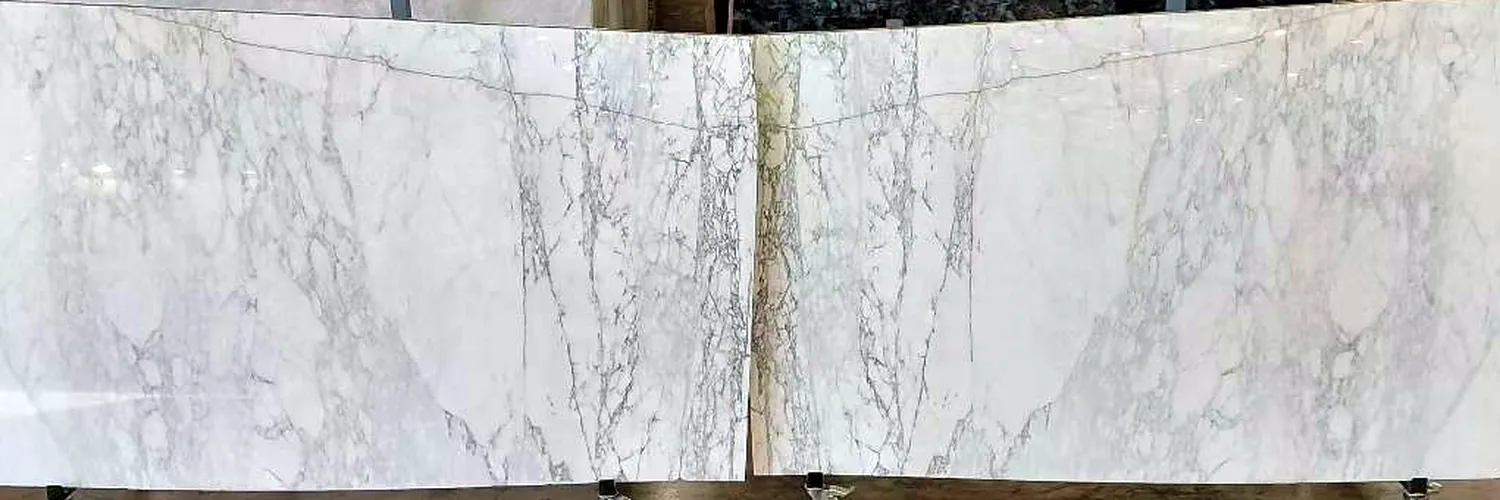
"Calacatta" is one of the most searched names in marble, but it covers many different varieties. Here is how to tell them apart.
What Calacatta is
It is a white marble from the quarries of the Apuan Alps, in the Carrara area (Tuscany, Italy). It stands out for its bright white background and veins that are thicker, bolder and sparser than Carrara's. It is one of the most exclusive and prized marbles in the world.
Calacatta, Carrara and Statuario are not the same
| Background | Veining | |
|---|---|---|
| Carrara | Greyish white | Fine, soft and abundant |
| Calacatta | Bright white | Thick and bold, grey or gold |
| Statuario | Very bright white | Grey, dramatic and well defined |
Best-known varieties
- Calacatta Oro: grey veins with golden hues on a white background. The most sought-after for luxury kitchens.
- Calacatta Viola: white with burgundy and violet veins and fragments. Every slab is a work of art; spectacular bookmatched.
- Calacatta Borghini: very wide, high-contrast grey veins with lots of movement.
- Calacatta Macchia Vecchia: large grey and gold patches and veins. The name means "old stain".
- Calacatta Lincoln, Caldia, Cremo…: other trade names for particular quarries or blocks, with nuances of colour and vein density.
Note: Calacatta Da Vinci is a quartzite with a Calacatta look, not a marble. Many engineered quartz and porcelain surfaces also use the name "Calacatta" for their designs.
How to choose
- Look at the whole slab: Calacatta veining is sparse and large; a small sample is misleading.
- Think about the layout: where you want the main veins to fall on your countertop or wall.
- Consider bookmatching for walls and waterfalls — see this guide.
- Remember it is marble: in the kitchen it needs care. Read the pros and cons.
Browse our marbles or get a quote.
Have a project in mind?
Ask us for a no-obligation quote: we will reply with an indicative price.