Quartzite that looks like marble: 6 stones and how to make sure it's real
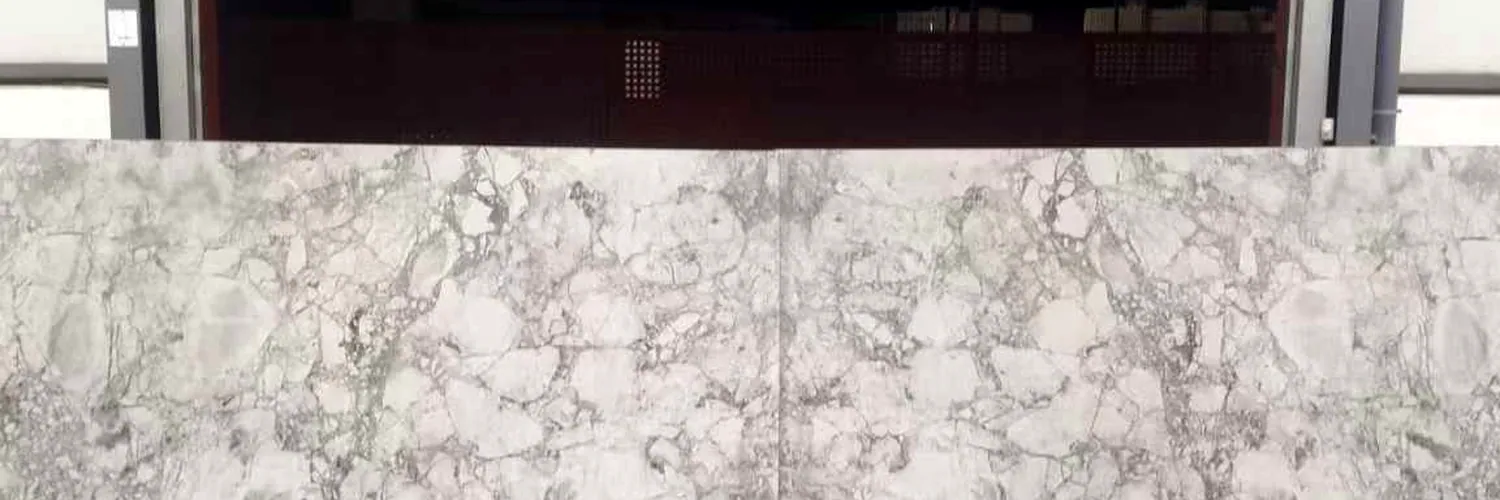
It is the question every marble lover with a busy kitchen asks: is there a stone that looks like marble but does not etch or scratch? Yes: quartzite. Here are six options from our catalogue, and the one trap to watch out for.
Why quartzite
Quartzite is mostly quartz, a mineral much harder than the calcite in marble. In practice that means a true quartzite is not scratched by a knife and does not get dull etch marks from lemon or vinegar. Some quartzites also have soft, flowing veins that look very much like marble. We compare the two in detail in marble vs quartzite.
Six quartzites with a marble look
- Taj Mahal: a warm cream background with soft beige and golden veins. The closest thing to a light, warm marble, and probably the most popular quartzite in the world. See our Taj Mahal guide.
- Calacatta Da Vinci: a pearl-grey background with herringbone veins repeating diagonally, like a veined Italian marble.
- Super White: white with grey veins and clouds, very similar in look to Carrara-style marble. Read the warning below.
- Mont Blanc: a greyish white with soft veins that recall snow, a bright alternative to white marble.
- Cielo: a dark grey background with light veins that form a herringbone when book-matched, for those who prefer a dark marble look.
- Roma Imperial: a cream background with gold and reddish veins in large patterns, warm like a golden marble.
The trap: "soft quartzite"
Some stones sold as quartzite, especially white ones, are actually dolomitic marble, sometimes called "soft quartzite" in the trade. Dolomite is a little harder than regular marble, but it still etches with acids. The name on the label is not enough: what matters is the actual slab. Before you buy any white quartzite, including from us, ask for a sample of the slab and do two quick tests:
- Glass test: rub a sharp corner of the sample firmly across a piece of glass. Real quartzite leaves a scratch in the glass; marble and dolomite do not.
- Acid test: leave a few drops of lemon juice or vinegar on the polished face for 10 minutes, rinse and dry. If a dull mark remains, treat the stone like marble.
If it passes both, you have the best of both worlds. If it does not, it can still be a beautiful choice, as long as you know how to care for it like marble.
Things to know before choosing
- Fabrication takes longer. Quartzite is harder to cut and polish than marble, so fabrication quotes are usually somewhat higher.
- It still needs sealing. Hard does not mean non-porous: do the water-drop test.
- Every slab is different. Choose the actual slab, not a small sample, especially with veined stones like these.
Want to see them side by side? Ask us for photos of real slabs of the ones you like.
Have a project in mind?
Ask us for a no-obligation quote: we will reply with an indicative price.